
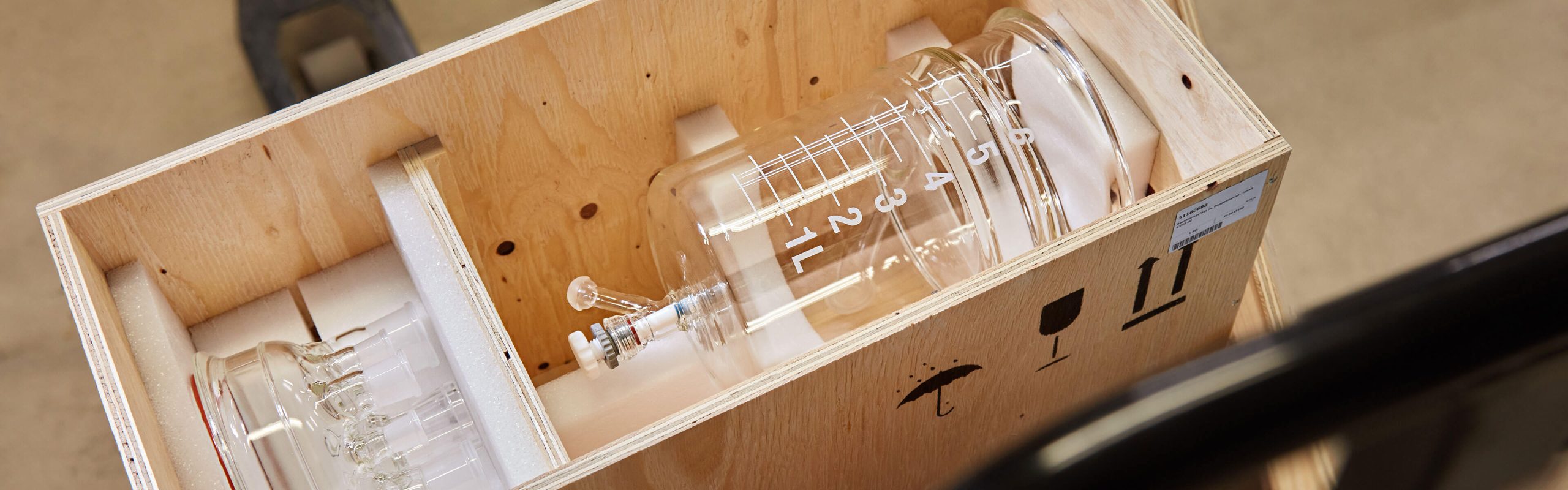
What is a Jacketed Reactor?
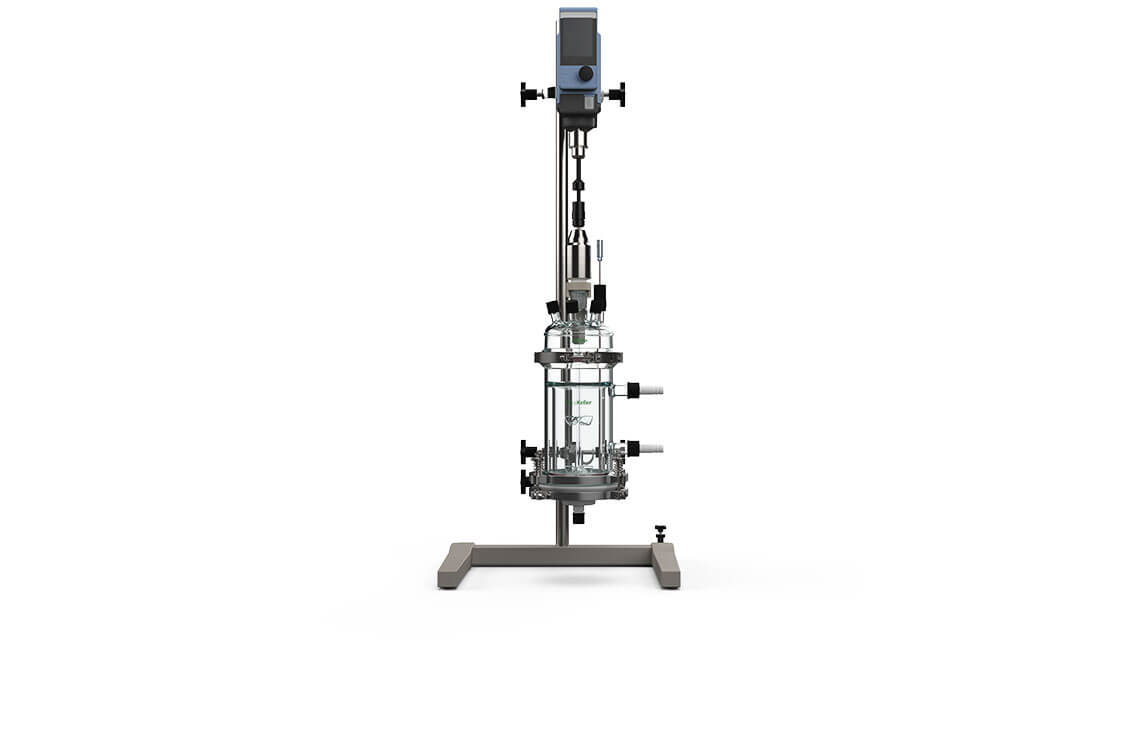
A Jacketed Reactor is a specialized vessel designed for precise temperature control during chemical reactions. It features an inner chamber where the chemical reaction occurs and an outer ‘jacket’ through which a heat transfer fluid flows. This design ensures the chemical process medium is separate from the heating or cooling fluid and ensures jacketed glass reactors are ideal for a wide range of industrial applications.
The ability to adjust the temperature and flow rate of the circulating heat transfer fluid enables uniform temperature control of the chemical process, essential for maintaining reaction stability, safety and efficiency. A second outer ‘vacuum jacketed’ layer may also be added to provide further stability at extremes of high and low temperatures.
Historically, chemical reactors began as simple glass or metal vessels with limited control over reaction conditions. As industrial chemistry and chemical engineering advanced, the requirement for more precise thermal management led to the development of jacketed systems. Early versions used simple steam or water jackets to regulate temperature. Modern reactors now incorporate advanced materials like borosilicate glass (to provide visibility of the process) or stainless steel or Hastelloy.
Jacketed reactors are used for an extensive range of industrial applications for temperature-critical processes. In chemical synthesis they enable controlled reactions such as hydrogenation, nitration, and esterification. In pharmaceuticals they support API synthesis, precision crystallization and solvent recovery during scale-up. They are also increasingly being used in peptide synthesis (SPPS). In the food and beverage industry, they handle extraction, distillation, pasteurization and fermentation, preserving flavour and safety. Petrochemical and polymer plants use large jacketed reactors for polymerization, hydrogenation and feedstock blending. Materials science employs them for nanoparticle synthesis and specialty coatings. Their precise thermal control, agitation and integration with condensers, PAT sensors and TCUs make them essential for reproducible, scalable, and safe production.
Glass reactors: The all-rounder among glass apparatus
Key components of a Jacketed Reactor system
The vessel forms the primary and most important part of the Jacketed Reactor system. Common materials include borosilicate glass for chemical resistance and visibility, and stainless steel for high pressure, high-temperature applications. When scaling up, borosilicate glass becomes less viable, and reactors of glass-lined stainless steel are often used. Consideration must be given to how the final product will be removed from the reactor, either through a valve at the bottom of the reactor or from the top of the reactor.
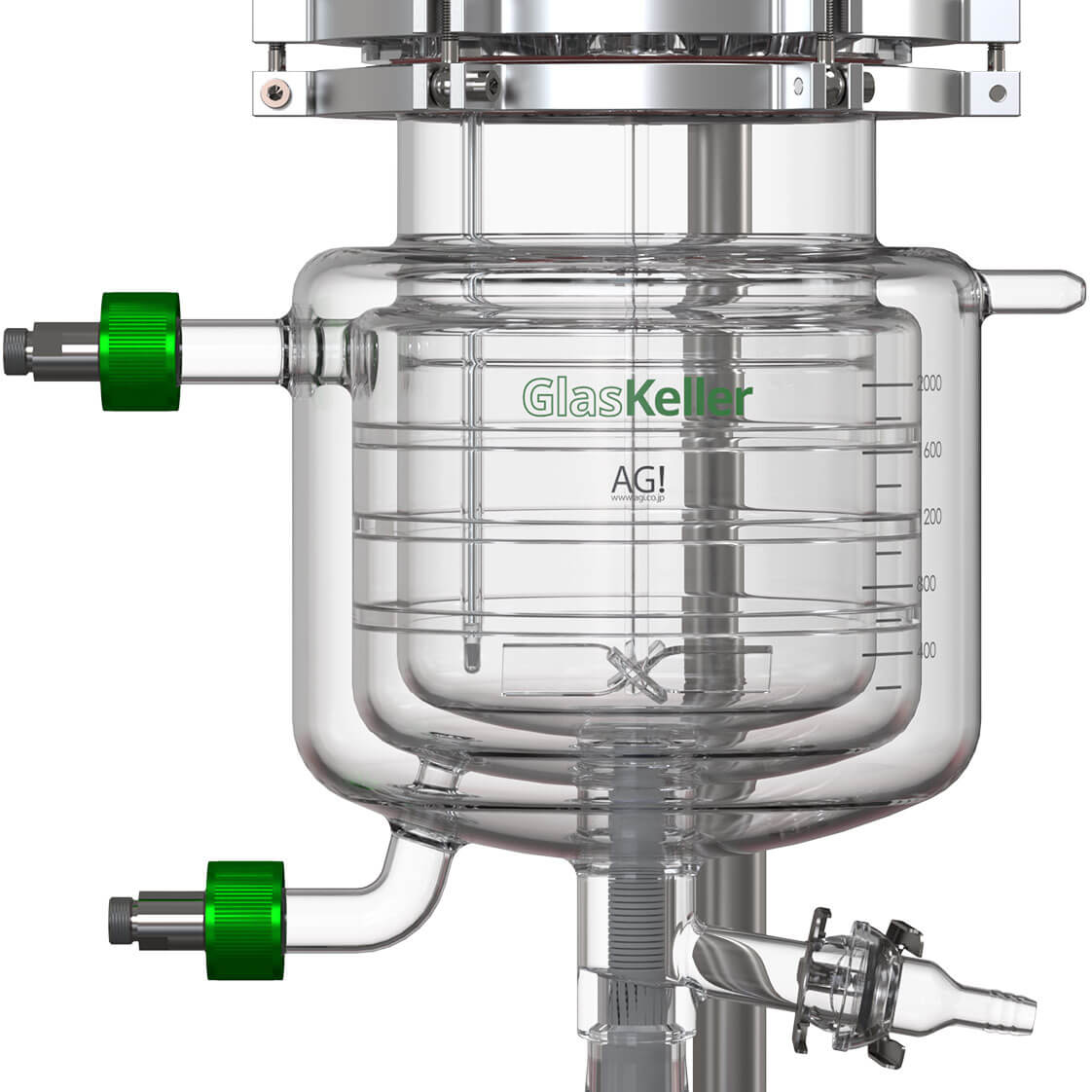
The jacket enables the efficient heat transfer ensuring thermal control of the reaction media. It is important that the jacket provides a continuous flow of the thermal fluid avoiding areas which may arise to ‘hot’ or ‘cold’ spots; thereby ensuring uniform temperature distribution across the whole of the reactor. Advancements in design of reactors, such as GlasKeller’s Ring Baffle technology ensure optimal thermal performance of the reaction contents. Ring baffles are a series of ridge-like structures inside the jacket. The glass ridges direct the flow of thermal transfer uniformly and enhance the thermal exchange between the jacket and the process. This extra control is ideal for adapting to temperature changes within the process medium.
The temperature control unit (TCU) drives the temperature of the system by regulating the heating or cooling fluid that circulates through the jacket. TCUs integrate sophisticated PID controllers and temperature sensors for automated, precise temperature control.
The agitator and stirrer motor also play a vital role in ensuring a successful chemical reaction. They promote uniform mixing of reactants, improving heat and mass transfer within the reactor. A wide range of different types of agitators can be used, selected based by application. For example, pitched-blade turbines are most suited to low-viscosity fluids where anchor stirrers maintain movement in high-viscosity or polymerizing mixtures.
To complete the Jacketed glass reactor system set up, many accessories are often included. These include, but are not limited to:
- Condensers to recover volatile solvents and prevent pressure build up
- PAT probes and sensors for in-process monitoring including temperature, pH, IR, crystal size and conductivity
- Pressure-relief and sampling valves for safety and material withdrawal
- Automation and control modules to allow control of the reaction including data logging and safety alarms
Ring Baffle: The ability to individually control the temperature and flow rate of the circulating heat transfer medium ensures uniform temperature distribution within the process—a key factor for reaction stability, safety, and efficiency.
Operating principles of a Jacketed Reactor
The Jacketed reactor operates by circulating a thermal fluid through the outer jacket surrounding the reaction vessel. Heat transfer occurs via conduction through the vessel wall and convection within the fluid, allowing precise heating or cooling of the reactor contents. This dual mechanism ensures efficient energy exchange between the jacket and the internal media.
The temperature control unit (TCU) regulates the thermal fluid’s temperature and flow rate, maintaining desired reaction conditions. Accurate temperature control is critical for reaction kinetics, product yield, and safety – especially in exothermic or sensitive processes. PID controllers and sensors continuously monitor and adjust parameters to avoid deviations.
Heat transfer efficiency depends on several factors:
- Jacket design: Features like ring baffles or half-pipe coils enhance turbulence and surface contact
- Fluid properties: Viscosity, thermal conductivity and flow rate affect performance
- Mixing: Agitators improve internal convection, distributing heat uniformly
- Material choice: Glass or stainless-steel influence conductivity and corrosion resistance
Together, these elements enable jacketed reactors to deliver controlled, scalable, and repeatable thermal environments for a wide range of applications such as chemical synthesis, crystallization, fermentation, and more.
Types of Jacketed Reactors
Jacketed reactors vary by material, jacket design and scale, each tailored to specific process needs.
Jacketed glass reactors (typically borosilicate) offer chemical resistance and visibility, ideal for lab-scale research and low-pressure reactions. Stainless steel reactors handle high pressure and temperature, making them suitable for pilot and industrial-scale operations. For larger volumes, glass-lined steel combines durability with corrosion resistance.
Single-jacketed reactors use one outer shell for thermal fluid circulations, offering basic temperature control. Double-jacketed reactors add vacuum insulation between layers enhancing thermal efficiency and minimizing heat loss – ideal for sensitive or energy-intensive processes.
By scale (size and volume), reactors range from:
- Lab-scale (0.1 – 20 L): Used for R&D, in particular for process development
- Pilot Plant (20 – 100 L): Bridge between lab and full production, validating process parameters
- Industrial scale (100+ L): Designed for continuous or batch manufacturing
Specialized designs include continuous stirred-tank reactors (CSTRs) which maintain constant reactant input and product output, ensuring steady-state conditions. These are widely used in chemical, pharmaceutical and biochemical industries for scalable reproducible reactions.
Each type balances visibility, durability, thermal control and scalability to suit its intended application.
Filter reactors are becoming more widely used and are readily available from numerous reactor manufacturers. Filter reactors combine reaction and filtration in a single vessel, streamlining processes like crystallization, product isolation, and purification.
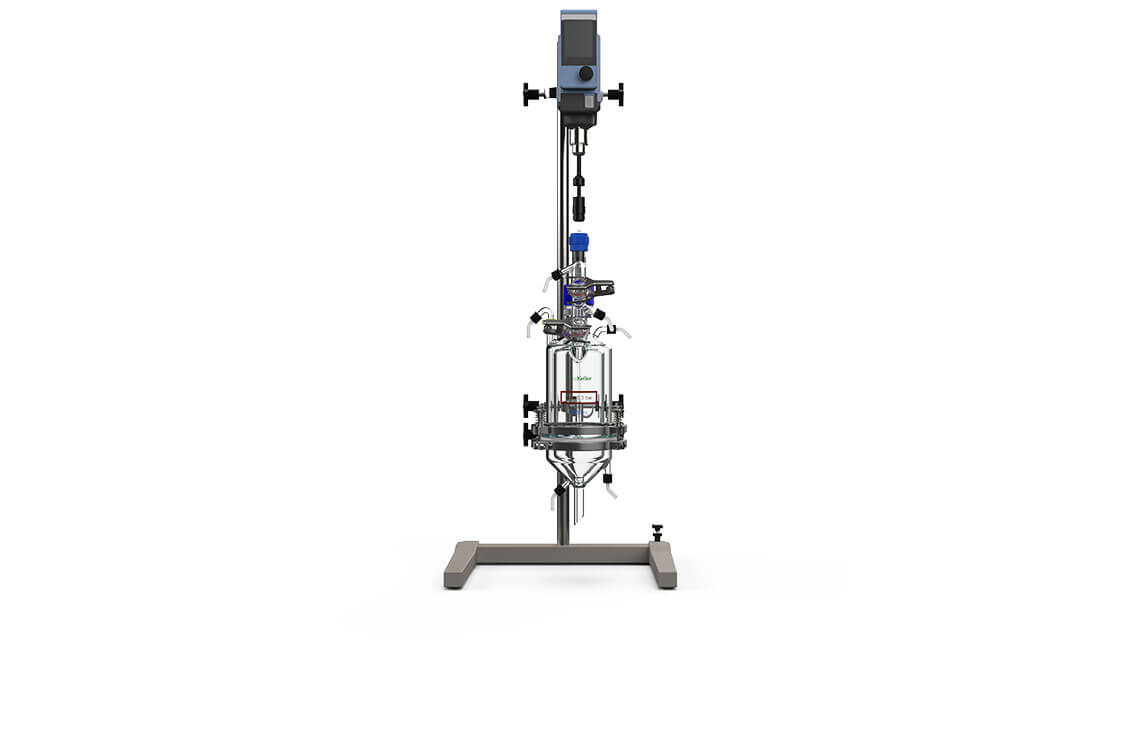
Filter reactors combine reaction and filtration in a single vessel, enabling more efficient process control in applications such as crystallization, product recovery, and purification.
Selecting the Right Jacketed Reactor
Start with the reaction type and consider the expected temperature changes of your reaction. For highly exothermic reactions, choose a reactor with high heat removal capacity, large jacket surface area, high-flow TCUs, and robust agitation. For endothermic reactions prioritise efficient heating media and good thermal contact.
Match size and material to scale and chemistry. Use borosilicate glass for small-scale, corrosive, and observational work. Jacketed glass reactors are ideal for R&D in process development and scale up prior to the pilot plant. Use stainless steel or glass-lined steel for pilot and industrial scales, high pressure, or abrasive chemistries. Consider vessel geometry for mixing and solids handling.
Specify temperature and pressure limits upfront. Select jacket type accordingly: single jacket for moderate control, half-pipe or ring baffle jackets for improved heat transfer, double jackets or vacuum jackets for extreme precision or insulation. Confirm TCU compatibility with required temperature range and thermal fluid.
Decide automation and control features by process risk and repeatability needs. Include PID TCUs, alarmed interlocks, PAT sensors, recipe control, and data logging for regulated or tightly controlled processes. Ensure scalability by matching lab controls to pilot and production automation to minimise transfer risks.
There are several reactor manufacturers on the market, so it’s essential to ensure the chosen system is fit for purpose—aligned with the specific demands of your process. Companies like GlasKeller offer a wide range of customization options, allowing users to tailor reactor design, materials, and accessories to meet precise operational and safety requirements.
Peptide reactors for peptide synthesis (SPPS) are also increasingly being used.
Troubleshooting Common Issues with Jacketed Reactors
Troubleshooting jacketed glass reactor systems begins with systematic checks and simple fixes before escalating to component replacement.
Temperature fluctuations: If temperatures fluctuate, purge air from the jacket, confirm thermal-fluid flow and TCU setpoints, recalibrate sensors and fine-tune PID settings, and improve agitation to eliminate stratification.
Leaks: Follow preventive routines—correct gasket selection, proper flange torque and scheduled pressure testing—and when a leak occurs isolate, replace seals or gaskets, and repair or replace corroded metal; damaged glass parts require specialist repair or replacement.
Stirring/Mixing problems: When mixing problems appear—settling solids, vortexing, or motor overload—verify the impeller type and speed for the fluid viscosity, add baffles or change impeller geometry, inspect shaft seals and bearings, and adjust RPM or swap to an anchor or pitched-blade design as appropriate.
Fouling and Cleaning: To minimise fouling and simplify cleaning, design out dead zones, control temperature profiles, and use compatible solvents; implement a validated CIP (clean in place) cycle with heated solvent or caustic washes, schedule mechanical cleaning where safe, and maintain passivation for stainless steel to prevent carryover and preserve long-term performance.
In addition to the above common troubleshooting issues, there are also some safety considerations when handling jacketed reactor systems. Ensure pressure-relief devices and emergency shut-off valves are fitted, tested and accessible. Operate only with documented procedures, trained staff and stepwise startup/shutdown checks. For air- or moisture-sensitive materials, maintain inert atmospheres, use appropriate transfer techniques and control static and oxygen ingress.
Importantly, always wear suitable PPE: chemical resistant gloves, safety goggles or face shield, lab coat or flame-resistant suit, and respiratory protection if required. Keep spill kits and emergency ventilation ready and perform complete risk assessments prior to use.
Our commitment to quality and innovation
Our commitment to quality and innovation means that we are constantly looking for ways to improve our borosilicate glass products. We work closely with our customers—scientists and researchers—to understand their needs and develop products that support and advance their research. This collaboration enables us to develop specific solutions that are precisely tailored to our customers’ experimental requirements and scientific goals.

